A pancreatic cyst is a fluid-filled pocket within the pancreas. Many are discovered incidentally on CT or MRI ordered for unrelated reasons, and most do not cause symptoms. The critical question: which cysts warrant concern, and which can be safely monitored?
Dr. Kalpit Devani, an interventional gastroenterologist based in Greenville, South Carolina, specializes in diagnostic and therapeutic endoscopic ultrasound (EUS) for pancreatic lesions. This guide explains the main types of cysts on the pancreas, when EUS adds value, and how surveillance or intervention decisions are made. Related reading: pancreatic mass detection and diagnosis and pancreatic cancer staging with EUS.
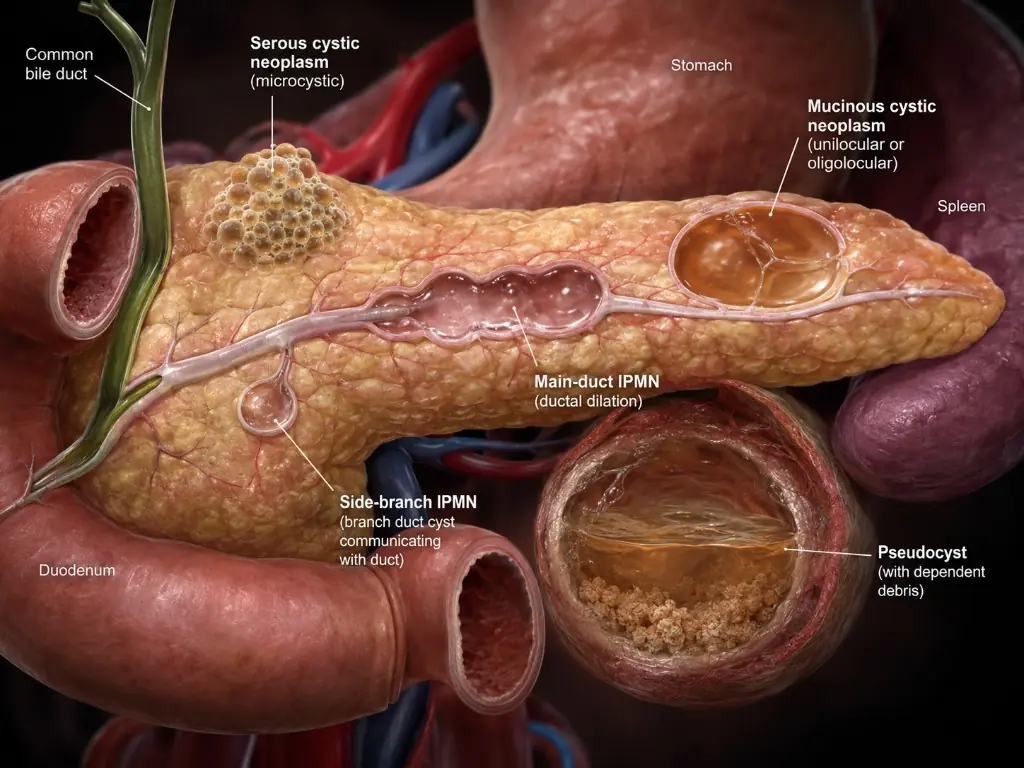
Types of Pancreatic Cysts
Serous cystic neoplasms (often microcystic, “grape-like”) are typically benign. They rarely become cancerous and often require only periodic imaging. Mucinous cysts—including side-branch IPMN, main-duct IPMN, and mucinous cystic neoplasms—carry a higher risk of progression toward pancreatic cancer and warrant closer follow-up. Pseudocysts form after pancreatitis; they are not true neoplasms and may resolve or need drainage depending on size and symptoms.
Distinguishing serous from mucinous cysts guides management. Imaging alone cannot always tell them apart. This is where EUS becomes essential.
How Pancreatic Cysts Are Found
Most pancreatic cysts are incidental findings on abdominal CT or MRI performed for other reasons. A patient may have no abdominal symptoms. The radiologist reports a cyst, and the primary care doctor or gastroenterologist must determine next steps. Dr. Devani often evaluates these patients to clarify cyst type and risk.
When Cysts Are Concerning: Mucinous vs. Serous
Mucinous cysts (IPMN, mucinous cystic neoplasms) have malignant potential. Size, location, presence of nodules, and main duct involvement influence risk. Serous cysts are almost always benign. EUS with fine-needle aspiration (FNA) or fine-needle biopsy (FNB) allows cyst fluid analysis. Carcinoembryonic antigen (CEA), amylase, and molecular markers help distinguish mucinous from serous lesions and guide surveillance intervals or referral for surgery.
How EUS Helps: FNA/FNB and Cyst Fluid Analysis
Diagnostic and therapeutic EUS provides high-resolution imaging of the pancreas and cyst wall. Through the echoendoscope, a thin needle is advanced into the cyst under real-time visualization. Fluid is aspirated for analysis. In expert hands, this is a low-risk procedure that yields critical information for risk stratification.
Dr. Devani uses EUS-guided FNA and FNB to characterize pancreatic cysts when imaging alone is insufficient. Fluid chemistry and cytology inform whether a cyst can be watched or should be referred for surgical evaluation. Learn more about comprehensive EUS and EUS in Greenville, SC.
Surveillance vs. Intervention
Not every pancreatic cyst needs intervention. Small serous cysts may require only periodic imaging. Mucinous cysts, especially those with worrisome features, may need shorter surveillance intervals or surgical evaluation. Guidelines from major societies help frame these decisions, but individualized assessment with an experienced interventional endoscopist is key.
When Surgery May Be Needed vs. Continued Monitoring
Surgery is typically considered when imaging or EUS suggests high-grade dysplasia or invasive cancer, or when a cyst grows significantly or develops concerning features. Many cysts remain in surveillance for years. The goal is to avoid unnecessary surgery while identifying lesions that warrant resection before malignancy develops.
If you or a loved one have a pancreatic cyst and need clarification on risk or next steps, or for referrals and consultations, Dr. Devani welcomes inquiries from patients and referring physicians in Greenville, South Carolina and across the Upstate. Evaluation often includes review of prior imaging and may involve diagnostic and therapeutic EUS, EUS across Upstate South Carolina, or coordination with diagnostic endoscopy services.
Frequently Asked Questions
What are the main types of pancreatic cysts?
Serous cystadenomas are usually benign. Mucinous cysts (including IPMN) carry higher cancer risk. Pseudocysts form after pancreatitis and are not cancerous.
How does EUS help evaluate a pancreatic cyst?
EUS provides detailed imaging and allows cyst fluid sampling (FNA/FNB). Fluid analysis helps distinguish benign from potentially malignant cysts and guides surveillance or surgery decisions.
Do all pancreatic cysts need to be removed?
No. Many serous cysts are monitored. Mucinous cysts with worrisome features may require surgery. Individual assessment with an EUS specialist determines the best approach.
How often should a pancreatic cyst be monitored?
It depends on cyst type and features. Low-risk lesions may be imaged every 1-2 years. Higher-risk cysts may need more frequent follow-up or surgical evaluation.
Dr. Kalpit Devani, MD, FACP, FACG, FASGE is a board-certified interventional gastroenterologist based in Greenville, South Carolina, specializing in diagnostic and therapeutic EUS, complex ERCP, and endoscopic suturing.
Related Posts
Post-ERCP Pancreatitis in Malpractice Litigation: A Guide for Defense Attorneys
Post-ERCP pancreatitis is the most common ERCP complication and the most common ERCP malpractice claim. What defense counsel should know about risk, causation, and the record.
Read more →Choosing a Gastroenterology Expert Witness for an Advanced Endoscopy Case
Board certification does not tell you whether a gastroenterologist performs ERCP or EUS. How attorneys should evaluate an expert for an endoscopy case.
Read more →Pancreatic Cancer Staging: How EUS Provides Answers
Staging determines whether pancreatic cancer is resectable. EUS offers high-resolution imaging, tissue diagnosis via FNB, and vascular assessment—often in one session—to guide treatment in Greenville and Upstate SC.
Read more →This article is for educational purposes only and does not constitute medical advice. Please consult your physician for individualized care.