When the gallbladder becomes diseased (typically from acute cholecystitis, or inflammation/infection), surgery to remove it is the standard treatment. But for some patients, surgery carries too much risk. EUS-guided gallbladder drainage offers a minimally invasive, endoscopic alternative when traditional cholecystectomy is not feasible.
Dr. Kalpit Devani, an interventional gastroenterologist in Greenville, South Carolina, specializes in diagnostic and therapeutic EUS and advanced biliary procedures. This guide explains when EUS-guided gallbladder drainage is considered, how it works, and what patients can expect.
When the Gallbladder Is a Problem But Surgery Isn't an Option
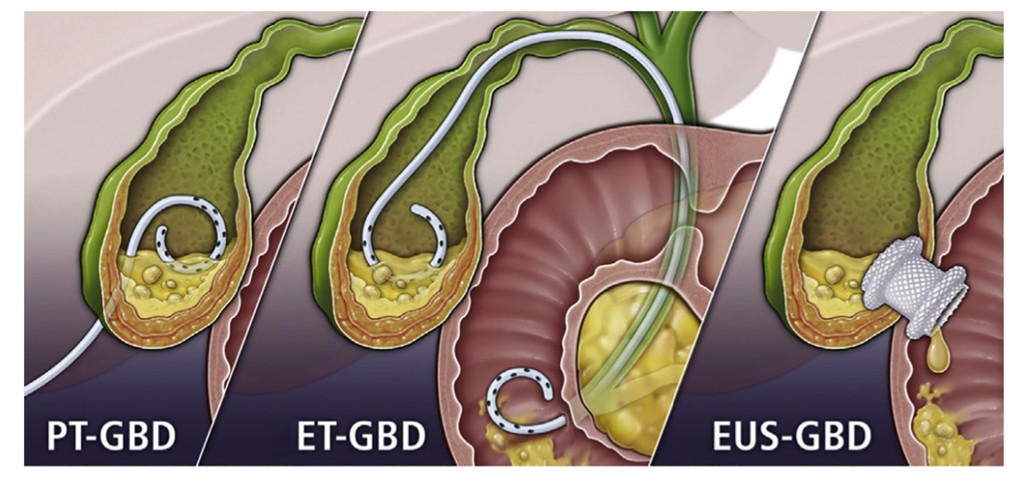
High-risk patients (older adults with multiple comorbidities, those with cirrhosis or critical illness) may not tolerate laparoscopic or open cholecystectomy. Percutaneous drainage (a tube through the skin into the gallbladder) has been the main alternative, but it requires an external drain and carries risks of dislodgment and infection. EUS-guided gallbladder drainage creates an internal stent between the gallbladder and stomach or duodenum, allowing bile to drain without an external tube.
What Is EUS-Guided Gallbladder Drainage?
EUS-guided gallbladder drainage uses an echoendoscope to visualize the gallbladder from the stomach or duodenum. A lumen-apposing metal stent (LAMS) is deployed, creating a channel between the gallbladder and GI lumen. Bile drains internally, relieving obstruction and infection. The stent may remain in place or be removed after the acute episode, depending on the clinical situation.
How It Works: LAMS Placement and Internal Drainage
The procedure is performed under sedation. The gallbladder is punctured under EUS guidance, a wire is advanced, and a LAMS is deployed to create a fistula. Bile flows into the stomach or duodenum. The acute cholecystitis resolves without surgery or a percutaneous tube.
Who Is a Candidate?
Candidates include patients with acute cholecystitis who are not fit for surgery due to age, comorbidities, or critical illness. The decision is made jointly by the patient, surgeon, and interventional gastroenterologist. EUS-guided gallbladder drainage is a specialized procedure performed at centers with expertise in therapeutic EUS.
Outcomes: Success Rates and Symptom Relief
Success rates are high in experienced hands. Most patients experience prompt relief of pain and infection. The stent can often be removed endoscopically after several weeks, or left in place for longer-term drainage when appropriate.
Comparison to Percutaneous Drainage
Percutaneous drainage requires an external tube and carries risks of tube dislodgment, bile leakage, and skin infection. EUS-guided drainage is fully internal (no external tube) and many patients prefer it. It is more technically demanding and requires an interventional endoscopist with expertise in therapeutic EUS.
Recovery and Follow-Up
Recovery is typically faster than surgery. Patients are observed briefly and may go home within a day or two. Follow-up endoscopy may be needed to remove or exchange the stent. Long-term management is individualized.
If you or a loved one have gallbladder disease and cannot undergo surgery, or for referrals and consultations regarding EUS-guided gallbladder drainage, Dr. Devani welcomes inquiries from patients and referring physicians in Greenville, South Carolina and beyond. Services include comprehensive EUS and complex ERCP for biliary and gallbladder conditions.
Frequently Asked Questions
When is EUS-guided gallbladder drainage used?
When a patient has acute cholecystitis but is too high-risk for surgery. It creates an internal drain from the gallbladder to the stomach or intestine using a stent.
How does it compare to percutaneous drainage?
EUS-guided drainage is fully internal (no external tube). It avoids tube dislodgment and skin site issues. It requires specialized endoscopic expertise.
Who performs EUS-guided gallbladder drainage?
Interventional gastroenterologists with expertise in therapeutic EUS, such as Dr. Kalpit Devani in Greenville, South Carolina. The procedure is offered at select centers.
Is the stent permanent?
Often not. The stent may be removed endoscopically after the acute episode resolves. In some cases it remains for longer-term drainage. Management is individualized.
Dr. Kalpit Devani, MD, FACP, FACG, FASGE is a board-certified interventional gastroenterologist based in Greenville, South Carolina, specializing in diagnostic and therapeutic EUS, complex ERCP, and endoscopic suturing.
Related Posts
Post-ERCP Pancreatitis in Malpractice Litigation: A Guide for Defense Attorneys
Post-ERCP pancreatitis is the most common ERCP complication and the most common ERCP malpractice claim. What defense counsel should know about risk, causation, and the record.
Read more →Choosing a Gastroenterology Expert Witness for an Advanced Endoscopy Case
Board certification does not tell you whether a gastroenterologist performs ERCP or EUS. How attorneys should evaluate an expert for an endoscopy case.
Read more →What Are Pancreatic Cysts? When to Worry and When to Watch
Pancreatic cysts are often found by chance on CT or MRI. Learn the main types—including IPMN, serous, mucinous, and pseudocyst—how EUS assesses risk, and when to watch vs intervene in Greenville and Upstate SC.
Read more →This article is for educational purposes only and does not constitute medical advice. Please consult your physician for individualized care.