ERCP (endoscopic retrograde cholangiopancreatography) is a procedure that allows physicians to examine and treat the bile ducts and pancreatic duct using a flexible endoscope passed through the mouth. It is performed for conditions ranging from bile duct stones to strictures and tumors.
Dr. Kalpit Devani, an interventional gastroenterologist in Greenville, South Carolina, performs ERCP regularly for biliary and pancreatic disease. This guide explains what the procedure involves, how to prepare, and what to expect during and after your ERCP.
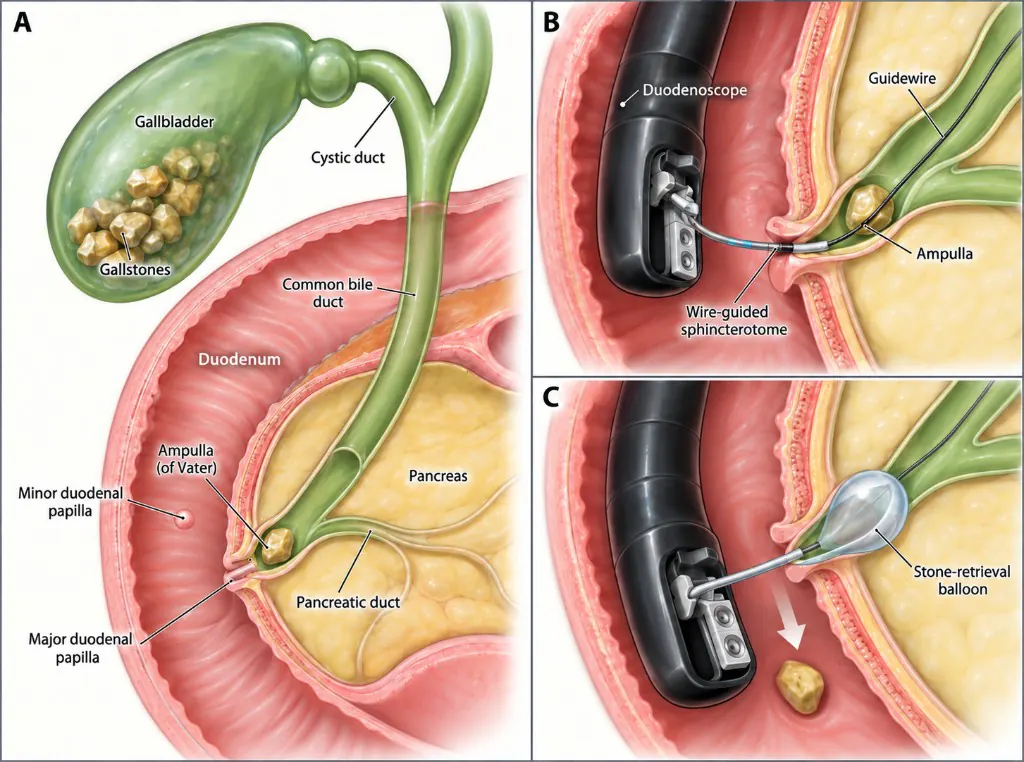
What Is ERCP and Why Is It Performed?
ERCP combines endoscopy with X-ray imaging. A scope is advanced to the duodenum, where the bile duct and pancreatic duct empty. A catheter is passed through the scope into these ducts, contrast dye is injected, and X-rays outline the anatomy. The physician can then remove stones, place stents, dilate strictures, or obtain tissue for diagnosis. Unlike surgery, ERCP is minimally invasive and typically allows same-day or next-day discharge.
Conditions Treated with ERCP
ERCP is used for bile duct stones (choledocholithiasis), bile duct strictures (benign or malignant), pancreatic duct stones or strictures, and certain pancreatic fluid collections. It also provides tissue sampling when cancer is suspected. Dr. Devani specializes in complex ERCP for difficult cases, including those with altered anatomy or prior failed procedures.
How to Prepare: Fasting, Medications, What to Bring
Patients are instructed to fast (no food or drink) typically for 6-8 hours before the procedure. Certain medications, especially blood thinners, must be reviewed and sometimes held. A driver is required because sedation is used. Bring a list of medications, allergies, and any prior imaging. The team will review your history and answer questions before you proceed.
During the Procedure: Sedation, Technique, Duration
ERCP is performed under sedation (conscious sedation or general anesthesia). The procedure typically takes 30-90 minutes depending on complexity. You will lie on your side. The endoscope is passed through the mouth and advanced to the small intestine. The physician then cannulates the bile duct or pancreatic duct, injects contrast, and performs any necessary treatment (stone extraction, stent placement, or biopsy). You will not remember the procedure.
After the Procedure: Recovery Room, What to Expect, Diet
After ERCP, you are monitored in recovery until sedation wears off. Most patients go home the same day. A sore throat is common. Diet advancement is gradual, typically clear liquids first, then advancing as tolerated. Your team will provide specific instructions. If a stent was placed, follow-up plans will be discussed.
Risks: Post-ERCP Pancreatitis, Bleeding, Perforation
ERCP carries risks. Post-ERCP pancreatitis (inflammation of the pancreas) occurs in a small percentage of patients and is usually mild. Bleeding and perforation are rare. Rectal indomethacin and selective pancreatic duct stenting can reduce pancreatitis risk. Dr. Devani and the team use evidence-based measures to minimize complications. Discuss risks and benefits with your physician before the procedure.
When to Call the Doctor After ERCP
Seek immediate attention for severe abdominal pain, fever, vomiting, or signs of bleeding. Mild discomfort is common and often resolves within 24-48 hours. When in doubt, call your gastroenterologist or go to the emergency department.
If you or a loved one need an ERCP evaluation or have questions about the procedure, or for referrals and consultations, Dr. Devani welcomes inquiries from patients and referring physicians in Greenville, South Carolina and beyond. Services include complex ERCP and diagnostic endoscopy.
Frequently Asked Questions
What is ERCP used for?
ERCP treats and diagnoses bile duct and pancreatic duct problems (stones, strictures, tumors) without open surgery. It allows stone removal, stent placement, and tissue sampling.
How long does ERCP recovery take?
Most patients go home the same day. A sore throat and mild abdominal discomfort may last 24-48 hours. Full recovery varies with the complexity of the procedure.
What are the risks of ERCP?
Post-ERCP pancreatitis (usually mild), bleeding, and perforation are possible. Experienced physicians use measures like rectal indomethacin to reduce pancreatitis risk.
Do I need someone to drive me home after ERCP?
Yes. Sedation is used, so a designated driver is required. You should not drive or make important decisions for 24 hours.
Dr. Kalpit Devani, MD, FACP, FACG, FASGE is a board-certified interventional gastroenterologist based in Greenville, South Carolina, specializing in diagnostic and therapeutic EUS, complex ERCP, and endoscopic suturing.
Related Posts
Post-ERCP Pancreatitis in Malpractice Litigation: A Guide for Defense Attorneys
Post-ERCP pancreatitis is the most common ERCP complication and the most common ERCP malpractice claim. What defense counsel should know about risk, causation, and the record.
Read more →Choosing a Gastroenterology Expert Witness for an Advanced Endoscopy Case
Board certification does not tell you whether a gastroenterologist performs ERCP or EUS. How attorneys should evaluate an expert for an endoscopy case.
Read more →What Are Pancreatic Cysts? When to Worry and When to Watch
Pancreatic cysts are often found by chance on CT or MRI. Learn the main types—including IPMN, serous, mucinous, and pseudocyst—how EUS assesses risk, and when to watch vs intervene in Greenville and Upstate SC.
Read more →This article is for educational purposes only and does not constitute medical advice. Please consult your physician for individualized care.